

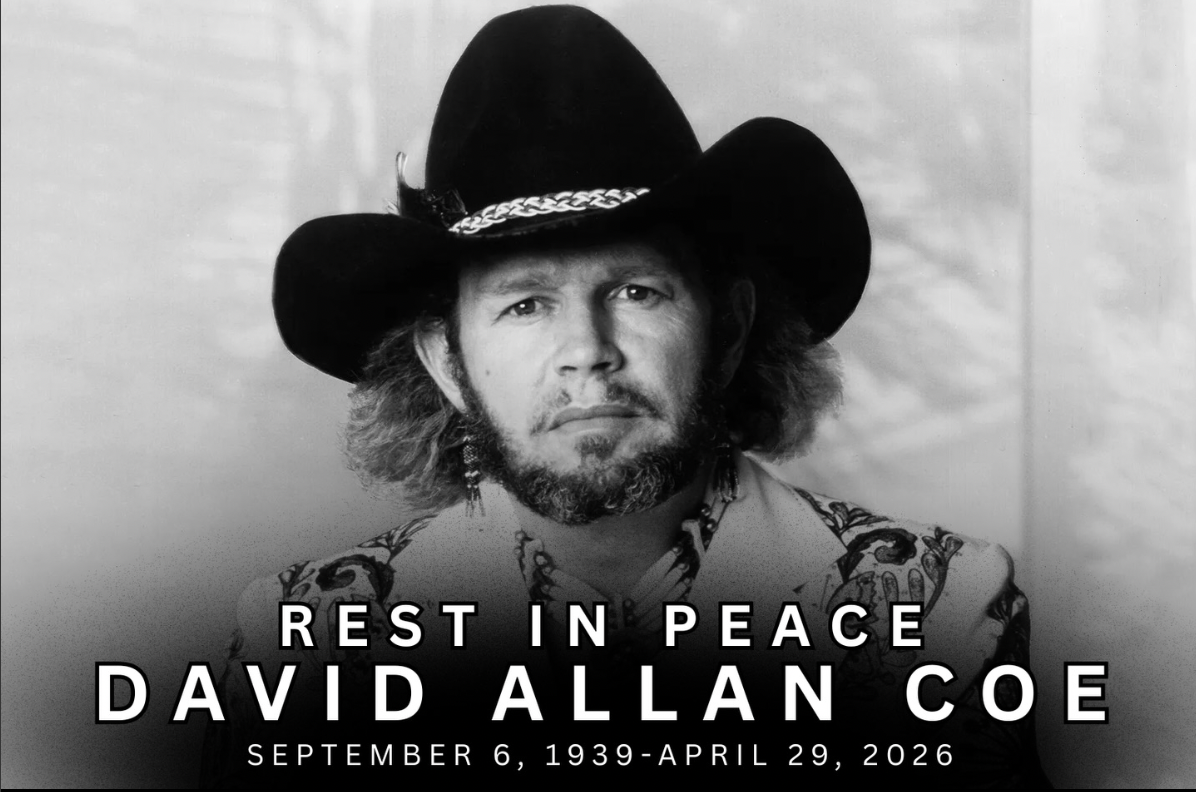

David Allan Coe, widely recognised for his role in shaping the outlaw country movement, has passed away at the age of 86. His death was confirmed on April 29, though further details were not immediately shared.
Known for his raw storytelling and unmistakable baritone, Coe leaves behind a legacy that helped redefine the boundaries of country music and gave a voice to those who lived outside the mainstream.
A Career Spanning Decades
Born on September 6, 1939, in Akron, Ohio, Coe’s early years were marked by hardship and instability. His experiences during that time would later influence both his songwriting and public image, contributing to the rebellious spirit that defined his career. When he arrived in Nashville in the late 1960s, success did not come easily. However, his persistence paid off when he gained recognition as a songwriter, most notably with Tanya Tucker’s chart-topping rendition of “Would You Lay With Me (In a Field of Stone)” in 1973. That success opened the door for his own recording career.
Songs Over the years
Coe soon stepped into the spotlight with a series of albums that showcased his unique style, blending country with elements of blues and rock. His 1975 song “You Never Even Called Me by My Name” became one of his most memorable works, admired for its humor and self-awareness. Throughout his career, he continued to produce music that resonated with fans, including tracks like “The Ride” and songs recorded by other artists, such as “Take This Job and Shove It,” which became a major hit. Even in later years, Coe remained dedicated to performing and connecting with audiences.
A Legacy Lives on
While his influence on music is undeniable, Coe’s legacy also includes moments that sparked public debate. Some of his past recordings drew criticism for their controversial language and themes, leading to ongoing discussions about artistic expression and responsibility. He also faced legal and financial challenges later in life. Despite these complexities, Coe’s impact on country music endures. He is remembered not only for his contributions to the genre but also for his individuality and lasting presence in American music history.